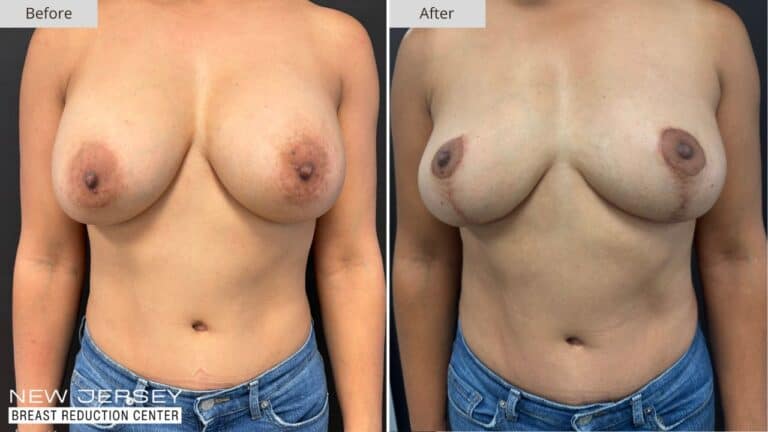
When we first evaluated this patient, one detail stood out before anything else. The areolas were enlarged and had stretched down to take up much of the lower breast surface. This is a common sign of long-term breast heaviness, and it played a direct role in shaping our surgical plan.
What the Areola Reveals About Breast Heaviness
The areola is not a fixed size. Over time, as breast tissue grows heavier, the skin and areola stretch to accommodate the added weight and volume. This patient’s before photos show exactly that pattern. The areolas had grown larger than normal and shifted downward with the breast tissue around them.
This detail matters because it tells us more than a simple photo of size alone. Areola stretching points to prolonged strain on the skin and the support structures underneath. It also affects how a breast looks even when volume comes down, since a stretched areola will not automatically shrink or lift on its own.
Reducing Size While Repositioning the Areola
Our surgical approach addressed two things at once. First, we reduced the overall volume of the breast, since the rounded but heavy shape shown in the before photos placed excess strain on this patient’s chest and shoulders. Second, we repositioned the breast tissue and lifted it higher on the chest wall.
The areola itself required its own correction. We trimmed the outer edge to reduce its diameter and moved it upward along with the reshaped breast tissue. This step is what allows the areola to sit in proportion with the smaller breast, rather than remaining stretched and low as it would if left untouched during a size-only reduction.
Getting the areola position right takes precision. Our surgeon worked to place it in a natural, centered position on the newly shaped breast mound rather than simply making it smaller in place. This is part of what separates a reduction focused only on removing tissue from one that also restores natural proportion.
Correcting the Lower Pole Droop
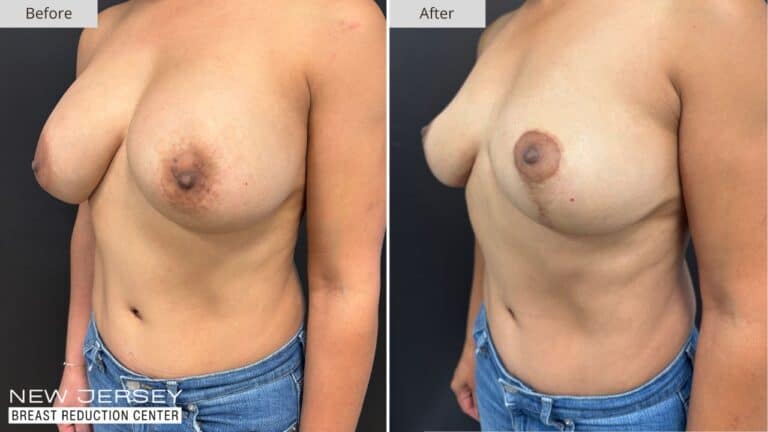
The before photos also show the lower halves of the breasts beginning to droop below the fold. This lower pole fullness, combined with the stretched areola, created a shape that looked both heavy and unsupported. Addressing one issue without the other would have left an incomplete result.
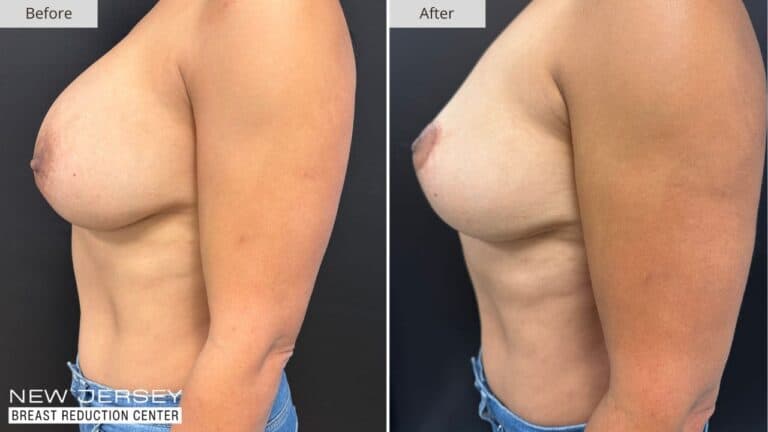
By tightening the lower pole skin and repositioning the breast tissue upward, we corrected the droop at the same time we corrected the areola. The side view photos show this clearly. This patient’s before profile shows a breast that projects forward and down, while the after profile shows a breast that sits higher and closer to the chest wall.
The Result
The after photos show a smaller, more lifted chest with an areola that now sits in proportion to the breast rather than stretched across its lower half. The shape reads as cleaner from both the front and the side. The rounded heaviness seen before surgery has given way to a more compact, supported contour.
This kind of result depends on treating the areola as part of the overall shape of the breast, not a separate detail to leave alone. When areola size and position are corrected alongside volume reduction and lift, the outcome looks proportional rather than simply smaller.
Considering Breast Reduction in New Jersey
If your areolas have stretched or shifted downward as your breasts have grown heavier, this is a sign worth discussing with a surgeon. Areola position is often overlooked, but it plays a real role in how proportional a breast reduction result looks in the end.
Contact New Jersey Breast Reduction Center to schedule a consultation and find out what a customized surgical plan could look like for your body.