Every breast reduction plan accounts for more than size. This patient’s case shows how skin tone factors directly into how incisions are placed and how a surgical team plans for scarring to fade well over time.
A Starting Point That Called for Major Correction
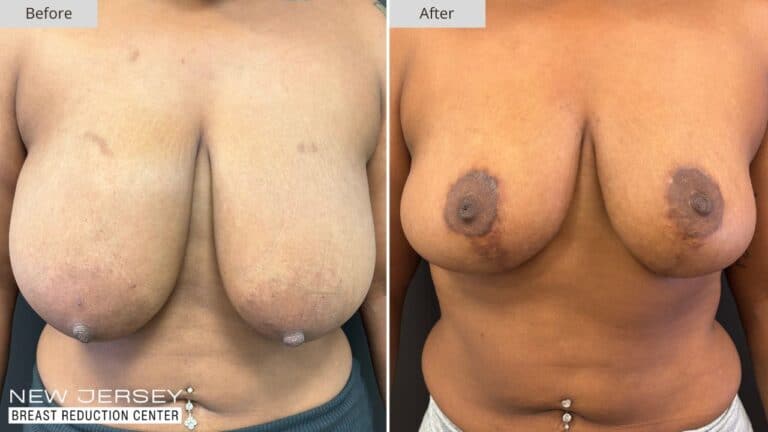
This patient’s before photos show very heavy breasts with deep stretching that extended well past the natural fold line. This level of stretching signals long-term strain on the skin and supporting tissue, and it meant a large amount of tissue needed to come out to bring real relief.
We removed a substantial volume of tissue during this patient’s procedure. This wasn’t a modest trim. Since the stretching extended so far past the fold, a conservative approach would have left much of the excess weight and sag in place. Full correction required addressing both the size and the extent of the stretched skin together.
Why Skin Tone Matters in Incision Planning
Skin tone plays a real role in how incisions are placed and how they’re expected to heal. Scars form the same way across all skin tones, but how visible a scar becomes as it matures can differ. For this patient, we planned incision placement with her natural pigment in mind, positioning the lines so they would blend in with her skin tone as healing progressed.
This kind of planning happens before the first incision is made. Our surgeon considers where scars will sit in relation to the breast fold and areola, and how the surrounding skin tone will interact with the healing tissue over the following months. Incisions placed with this in mind tend to settle into the skin more naturally over time, rather than standing out against it.
Lifting the Nipples and Resizing the Areolas
Alongside the tissue removal, this patient’s nipples were lifted into a much higher position on the chest wall. With breasts this heavy, the nipples typically sit low, pulled downward by the weight of the tissue below them. Lifting them is part of restoring a chest that looks balanced rather than bottom-heavy.
The areolas were also reduced as part of this same procedure. Heavier breasts often stretch the areola along with the surrounding skin, and left at their original size, they would have looked out of proportion against a smaller, lifted breast. Reducing them was a necessary final step, not an afterthought.
What the Before and After Photos Show
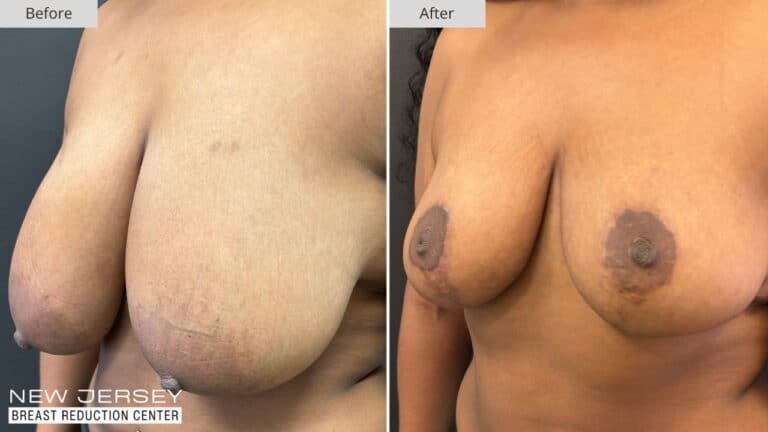
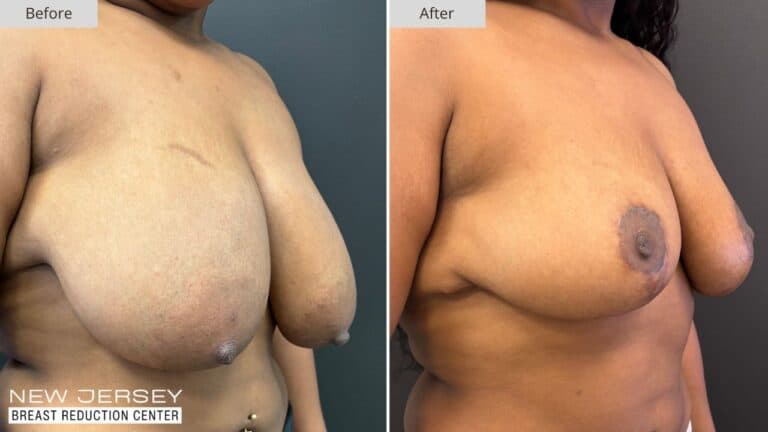
The side view photos make the scale of this patient’s case clear. Her before profile shows breast tissue projecting far forward and hanging well below the natural fold line. The after profile shows a breast that sits close to the chest wall, with the nipple positioned high and facing forward.
The front view tells a similar story. The after photos show a chest that looks lighter, rounder, and more youthful from every angle. This shift comes from the combination of major tissue removal, nipple repositioning, and areola reduction working together, not from any single step alone.
Planning for Long-Term Healing
Incision placement decisions made at the time of surgery continue to matter well after the initial healing period. As scars mature over the following year, their appearance depends partly on how well the original incision lines were matched to the patient’s skin tone and breast shape.
This is one reason a personalized surgical plan matters as much as the reduction itself. Two patients with similarly heavy breasts may need different incision approaches based on their skin tone, their skin’s elasticity, and how their tissue is distributed. Planning for all of this at the outset gives patients a better long-term result, not just an immediate one.
The Result
The after photos show a chest that looks lighter, rounder, and more youthful from every angle. The nipples now sit high on the chest wall, the areolas are proportioned to the new breast size, and the incisions were placed to blend with this patient’s natural skin tone as healing continues.
Is Breast Reduction Right for You?
If you’re carrying breasts heavy enough to stretch well past your natural fold line, a personalized plan that accounts for your skin tone and tissue distribution can make a real difference in your results.
Contact New Jersey Breast Reduction Center to schedule a consultation and learn what a customized surgical plan could look like for you.